
Rectal Cancer Treatment in Vijayawada
Precision-Based Cancer Care: Advanced Surgery, Medical Oncology, NGS, and Personalized Treatment Strategies
Advanced Rectal Cancer Care at Ravi’s American Cancer Care
Being diagnosed with rectal cancer can be emotionally and physically challenging for patients.
Patients often worry about:
- Surgery
- Chemotherapy
- One major concern for patients is whether a permanent colostomy bag will be required Quality of life after treatment
- Chances of cure
- Whether treatment can be personalized
The good news is that rectal cancer treatment has changed dramatically over the last decade.
Modern treatment is no longer based only on where the cancer is located. Today, doctors also study the biology of the cancer, its genetic profile, and its response to treatment to develop a personalized treatment strategy.
At Ravi’s American Cancer Care in Vijayawada, we combine advanced surgical oncology, medical oncology, molecular diagnostics, Next Generation Sequencing (NGS), liquid biopsy technology, and multidisciplinary treatment planning to provide state-of-the-art rectal cancer care.
Why Patients Choose Ravi’s American Cancer Care
A Modern Precision Oncology Approach
Patients have access to:
- Advanced Rectal Cancer Surgery
- Specialized Medical Oncology Care
- High-Definition Stryker 1788 Surgical Imaging
- SPY-PHI Fluorescence-Guided Surgery
- NGS-Based Molecular Profiling in Vijayawada
- Liquid Biopsy and Circulating Tumor DNA (ctDNA) Testing in Cancer Care
- Minimal Residual Disease (MRD) Assessment
- Immunotherapy Evaluation
- Targeted Therapy Planning
- Multidisciplinary Cancer Care
- Personalized Follow-Up & Survivorship Programs
Our Philosophy
"Modern rectal cancer treatment is not defined by a single treatment or machine. The best outcomes come from careful staging, multidisciplinary planning, precision surgery, personalized medical oncology, and molecular-guided decision-making."
What Is Rectal Cancer?
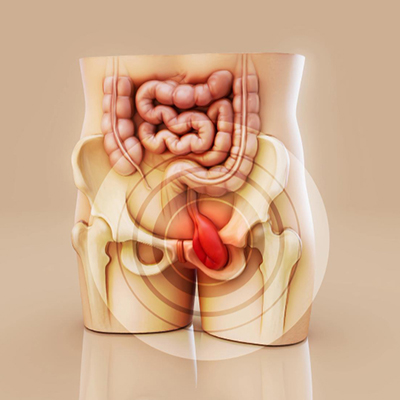
The rectum is the last segment of the large intestine, positioned just above the anal opening.
Rectal cancer develops when abnormal cells grow uncontrollably within the rectal lining.
Although rectal cancer is often grouped together with colon cancer under the term "colorectal cancer," rectal cancer is a distinct disease that often requires different treatment planning and surgical approaches.
Because of its location deep within the pelvis, treatment requires careful planning and specialized expertise.
Symptoms of Rectal Cancer
Common symptoms may include:
- Blood in the stool
- Rectal bleeding
- Changes in bowel habits
- Persistent constipation or diarrhea
- Feeling that the bowel does not empty completely
- Narrow stools
- Abdominal discomfort
- Pelvic pressure
- Fatigue
- Unexplained weight loss
Persistent symptoms should never be ignored.
Why Early Diagnosis Matters
When rectal cancer is detected early, treatment options are often broader and outcomes may be significantly improved.
Early diagnosis may:
- Improve cure rates
- Reduce treatment complexity
- Improve the chances of maintaining normal bowel function
- Improve quality of life after treatment
Importance of MRI in Rectal Cancer
Accurate staging is one of the most critical steps in planning rectal cancer treatment.
Unlike many cancers, rectal cancer treatment decisions often depend heavily on MRI findings.
MRI helps doctors understand:
- Tumor size
- Tumor location
- Depth of invasion
- Relationship to nearby structures
- Lymph node involvement
Accurate staging helps ensure that each patient receives the most appropriate treatment plan.
Every Rectal Cancer Is Different
Two patients may have rectal cancers that appear similar but behave very differently biologically.
Some tumors respond exceptionally well to treatment.
Others may require a different approach.
This is why modern oncology increasingly relies on molecular testing and precision medicine.
The future of cancer care is not simply identifying where the cancer is located—it is understanding the biology of the cancer itself.
Advanced Rectal Cancer Surgery
Surgery remains one of the most important treatments for rectal cancer.
The goals of surgery include:
- Complete cancer removal
- Preservation of bowel function whenever possible
- Accurate staging
- Reduction of recurrence risk
- Improvement of long-term outcomes
Because rectal surgery is performed within the narrow confines of the pelvis, precision is essential.
Advanced Surgical Technology: Stryker 1788 & SPY-PHI
At Ravi’s American Cancer Care, selected procedures may utilize the Stryker 1788 platform and SPY-PHI fluorescence-guided imaging technology.
These advanced technologies provide:
- High-definition visualization
- Enhanced anatomical detail
- Improved identification of critical structures
- Real-time fluorescence imaging
- Assessment of tissue perfusion
- Support for precision surgery
Modern surgical oncology is not simply about removing cancer.
It is about operating with greater precision, improved visualization, and enhanced decision-making.
Why Blood Supply Matters During Rectal Cancer Surgery
After the diseased portion of the rectum is removed, surgeons reconnect healthy bowel segments.
Successful healing depends heavily on adequate blood supply.
SPY-PHI fluorescence imaging helps assess tissue perfusion in real time during selected procedures.
This additional information may help surgeons optimize conditions for healing and support surgical planning.
Can Every Patient Avoid a Permanent Colostomy?
One of the most common concerns among rectal cancer patients is the possibility of a permanent colostomy bag.
The answer depends on:
- Tumor location
- Tumor size
- Stage of disease
- Response to treatment
- Individual anatomy
Whenever safely possible, modern rectal cancer treatment aims to preserve normal bowel function.
Treatment decisions are individualized for every patient.
Medical Oncology: More Than Chemotherapy
Modern medical oncology extends far beyond traditional chemotherapy.
Today's treatment options may include:
- Chemotherapy
- Targeted therapy
- Immunotherapy
- Precision oncology
- Molecular-guided treatment
Choosing the right treatment requires understanding the molecular characteristics of the cancer.
How Next Generation Sequencing (NGS) Is Changing Rectal Cancer Treatment
Next Generation Sequencing (NGS) studies the genetic blueprint of cancer cells.
Think of NGS as reading the cancer’s instruction manual.
NGS may help identify:
- KRAS mutations
- NRAS mutations
- BRAF mutations
- HER2 alterations
- Microsatellite Instability (MSI)
- Mismatch Repair Deficiency (MMR)
This information may influence:
- Targeted therapy selection
- Immunotherapy eligibility
- Treatment planning
- Prognosis
- Personalized care decisions
At Ravi’s American Cancer Care, advanced NGS testing is available in Vijayawada to support precision oncology.
Immunotherapy: A New Era for Selected Patients
Certain rectal cancers demonstrate molecular features such as:
- MSI-High status
- Mismatch Repair Deficiency (dMMR)
These patients may be candidates for immunotherapy.
Immunotherapy has transformed treatment possibilities for selected patients by helping the immune system recognize and attack cancer cells.
What Is Liquid Biopsy?
One of the most exciting developments in modern oncology is liquid biopsy.
Instead of relying only on tissue samples, liquid biopsy analyzes tiny fragments of tumor DNA circulating in the bloodstream.
Doctors can collect essential information through a minimally invasive blood test.
Understanding MRD (Minimal Residual Disease)
Even after successful treatment, microscopic traces of cancer may sometimes remain in the body.
These cells may be too small to appear on scans.
Using advanced liquid biopsy technology, circulating tumor DNA (ctDNA) may sometimes detect molecular evidence of residual disease before recurrence becomes visible on imaging.
MRD assessment may help:
- Evaluate recurrence risk
- Personalize surveillance
- Guide follow-up planning
- Support treatment decisions
This represents one of the most advanced applications of precision oncology available today.
Recovery & Life After Rectal Cancer
Successful treatment extends beyond surgery and medications.
Modern cancer care also focuses on:
- Recovery
- Nutrition
- Physical rehabilitation
- Emotional well-being
- Long-term surveillance
- Quality of life
Many patients return to active and productive lives following treatment.
Need a Second Opinion?
Patients diagnosed with:
- Rectal cancer
- Recurrent disease
- Complex pelvic tumors
- Advanced colorectal cancers
may benefit from specialized oncology review and personalized treatment planning.
A second opinion may help clarify:
- Surgical options
- Medical treatment recommendations
- NGS testing
- Liquid biopsy testing
- Immunotherapy eligibility
- Long-term surveillance strategies
Frequently Asked Questions
Is rectal cancer different from colon cancer?
Yes. Although both are forms of colorectal cancer, rectal cancer often requires different treatment planning because of its location within the pelvis.
Can rectal cancer be cured?
Many rectal cancers can be treated successfully, particularly when diagnosed early.
Will I need a permanent colostomy?
Not every patient requires a permanent colostomy. Treatment decisions depend on tumor location, stage, and response to treatment.
Is NGS testing important in rectal cancer?
NGS may provide important molecular information that can help guide personalized treatment decisions.
What is liquid biopsy?
Liquid biopsy analyzes tumor DNA circulating in the bloodstream and may assist with monitoring and treatment planning.
Is immunotherapy useful for rectal cancer?
Selected patients with MSI-High or dMMR tumors may benefit significantly from immunotherapy.
The Future of Rectal Cancer Treatment
The future of rectal cancer care is not one-size-fits-all treatment.
It is precision medicine.
By combining advanced surgery, high-definition surgical imaging, fluorescence-guided technology, molecular diagnostics, NGS, liquid biopsy, MRD testing, immunotherapy, and personalized treatment planning, modern rectal cancer care is becoming more precise than ever before.
“The future of cancer care lies in delivering the right treatment rather than simply increasing the amount of treatment. It is smarter treatment.”
Advanced Rectal Cancer Care in Vijayawada & Andhra Pradesh
Ravi’s American Cancer Care
Kaleswara Rao Road, opposite Pushpa Hotel Bus Stop, Suryaraopeta, Vijayawada – 520002
+91 8889996108
Services Include
- Rectal Cancer Surgery
- Medical Oncology
- Precision Oncology
- NGS Testing
- Liquid Biopsy
- MRD Assessment
- Targeted Therapy Planning
- Immunotherapy Evaluation
- Stryker 1788 Imaging
- SPY-PHI Fluorescence-Guided Surgery
- Personalized Cancer Care