
Liquid Biopsy
What is Liquid Biopsy ?
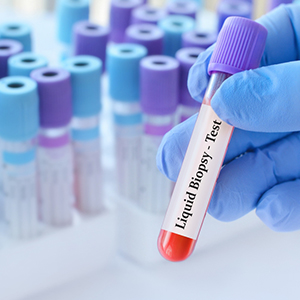
A liquid biopsy is a minimally invasive diagnostic procedure that identifies cancerous cells by analyzing fragments released into the bloodstream as tumors develop and shed material, providing a way to detect cancers without the need for traditional tissue biopsies.
What can it detect ?
- Circulating Tumor Cell (CTC) is a cancerous cell that has detached from the primary tumor and is moving through the bloodstream.
- Circulating Tumor DNA (ctDNA) consists of small pieces of tumor-derived DNA that are released into the bloodstream, carrying the genetic information that governs how cells function.
Circulating tumor cells (CTCs) and circulating tumor DNA (ctDNA) in your bloodstream serve as indicators of cancer presence, offering valuable genetic insights into the tumor. This information can assist your healthcare team in tailoring the most effective treatment strategies for your specific cancer type.
Liquid biopsy is an emerging diagnostic technique with promising applications in cancer management, and while it currently has a limited number of FDA-approved indications, research into its advantages and broader clinical utility continues to advance.
Liquid Biopsy v/s Traditional Biopsy
Unlike traditional biopsies that involve extracting a tissue sample from a tumor for laboratory analysis to determine if the cells are cancerous, liquid biopsies do not examine tumor tissue directly; instead, they identify indicators of cancer such as circulating tumor cells and tumor DNA in the bloodstream.
A biopsy is regarded as the definitive method for cancer diagnosis, serving as the most reliable procedure currently available for accurately identifying the presence of cancer cells.
While a liquid biopsy may not always identify tumor markers in a single blood sample despite the presence of a tumor, its detection of cancer can yield crucial insights into the cancer cells, assisting your healthcare provider in devising an effective treatment strategy.
When is a Liquid Biopsy Performed?
If you have advanced cancer that has spread to other parts of your body and your current treatments are ineffective, your healthcare provider might suggest a liquid biopsy. Metastatic cancer refers to cancer that has progressed beyond its original location, with cancer cells breaking away from the primary tumor and traveling through the bloodstream to establish new tumors elsewhere in the body.
Liquid Biopsy is used to:
- Provide your assessment or forecast based on the current information available.
Liquid biopsies enable the detection of circulating tumor cells (CTCs) linked to various cancers, with a lower number of these cells generally indicating a more favorable prognosis than a higher count. Your medical team can conduct regular assessments to track your disease progression and modify your treatment plan accordingly. - Determine appropriate treatment options or strategies.
Liquid biopsies are useful tools for determining if you are suitable for specific targeted cancer therapies, which aim to eliminate particular cancer cells by focusing on genetic mutations or errors present within them. For instance, if a cancer cell harbors a genetic abnormality that a targeted drug is designed to attack, a liquid biopsy can identify this mutation, enabling your healthcare provider to prescribe a treatment tailored to that specific genetic error.
If a traditional biopsy isn't feasible due to your health condition or the tumor's location, a liquid biopsy might be offered as a less invasive alternative for cancer diagnosis. Unlike traditional biopsies, which involve more invasive procedures, liquid biopsies require only a blood sample, making them suitable for patients who are too unwell or whose tumors are difficult to access without risking harm to nearby organs.
How does a Liquid Biopsy test work?
A liquid biopsy is performed through a straightforward blood draw, where your healthcare provider collects a sample and sends it to a laboratory for analysis. In the lab, specialized equipment isolates the cellular components from the plasma, the liquid portion of blood. A trained pathologist then examines the plasma for circulating tumor cells (CTCs) or circulating tumor DNA (ctDNA) to detect potential signs of disease.
Is it Painful?
A liquid biopsy involves a simple blood draw, typically causing only a brief prick or sting as the needle punctures your skin, with the discomfort quickly fading. One significant benefit of this procedure is that it is far less invasive and painful compared to a traditional tissue biopsy.
Results and Follow-up
What Do The Results Mean?
Blood tests that detect circulating tumor cells (CTCs) or circulating tumor DNA (ctDNA) can determine whether you have cancer, and if positive, assist your healthcare team in identifying the specific cancer type. Additionally, ctDNA tests can uncover common genetic mutations linked to various cancers, aiding in more precise diagnosis and personalized treatment planning.
When To Expect The Results?
The outcomes are expected to be available within a period of two to three weeks.
How Accurate Are The Results?
FDA-approved liquid biopsies are proven to perform their intended functions, with circulating tumor cell (CTC) tests helping healthcare providers forecast outcomes and track disease progression, while circulating tumor DNA (ctDNA) tests detect genetic mutations in cancer cells to inform treatment choices. However, liquid biopsies are not always definitive for diagnosing cancer, and a traditional tissue biopsy remains necessary for confirmation.
Resources
- Heidrich I, Ačkar L, Mossahebi Mohammadi P, Pantel K. Liquid biopsies: potential and challenges. Int J Cancer. 2021;148(3):528-545. Accessed 8/11/2022.
- Lianidou E, Pantel K. Liquid biopsies. Genes Chromosomes Cancer. 2019;58(4):219-232. Accessed 8/11/2022.
- Lone SN, Nisar S, Masoodi T, et al. Liquid biopsy: a step closer to transform diagnosis, prognosis and future of cancer treatments. Mol Cancer. 2022;21(1):79. Published 2022 Mar 18. Accessed 8/11/2022.
- Martins I, Ribeiro IP, Jorge J, et al. Liquid biopsies: applications for cancer diagnosis and monitoring. Genes (Basel). 2021;12(3):349. Published 2021 Feb 27. Accessed 8/11/2022.
Blogs List
- Understanding Breast Cancer
- Liquid Biopsy
- Thrombocytosis
- Thrombocytopenia
- Splenomegaly
- Polycythemia
- Pancytopenia
- NHL (Non-Hodgkin Lymphoma)
- Neutropenia
- Myelodysplastic syndrome
- Multiple myeloma
- Hodgkin lymphoma
- Elevated White Blood Cell
- Bone Marrow Transplant
- B-ALL or B-cell acute lymphoblastic leukemia
- Anemia
- Acute myeloid leukemia